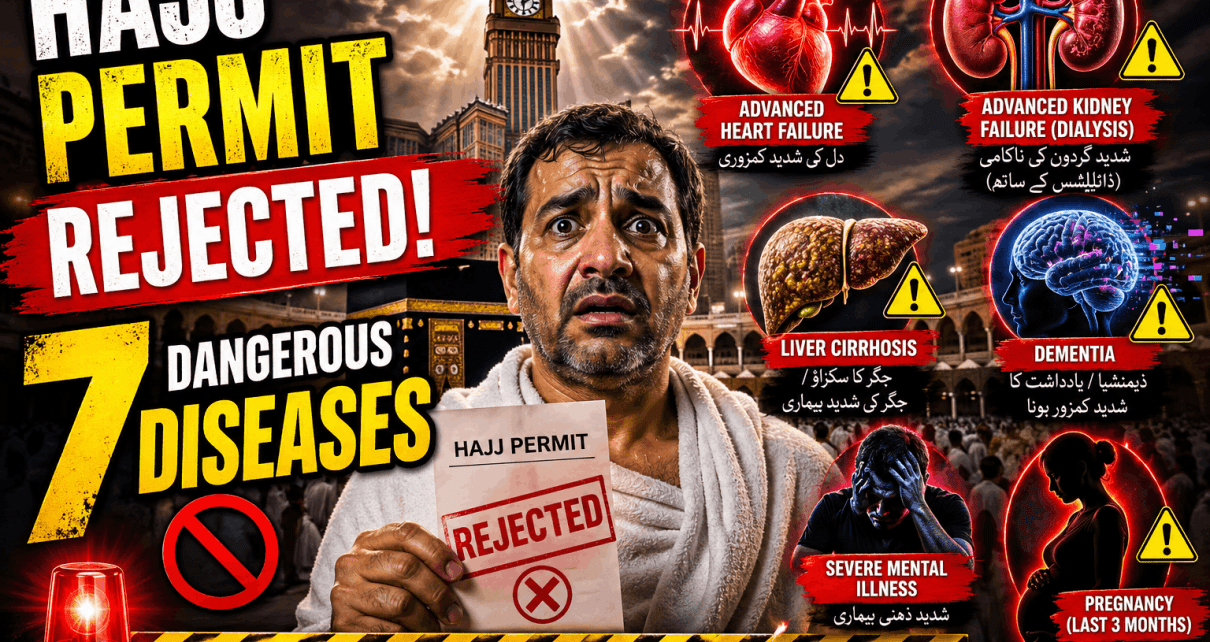
No Hajj This Year If You Have This Disease
The Saudi Ministry of Health has issued a crucial health alert ahead of the upcoming Hajj season, highlighting medical conditions that may hinder people from obtaining a permit for Hajj. The move is part of ongoing efforts to ensure the safety, well-being, and smooth experience of millions of pilgrims who come to Mecca every year.
Hajj itself is one of the largest religious gatherings in the world and requires good physical and mental fitness due to extreme weather, long distances of walking and overcrowded conditions. Authorities have stressed that only the medically fit should undertake the pilgrimage to avoid serious health risks.
Besides health restrictions, the Ministry has also tightened the conditions for mandatory vaccinations, especially against meningococcal meningitis, which should be done at least 10 days before arrival in Saudi Arabia.
List Of Diseases That May Prevent Hajj Permit In 2026
Below is the list of conditions officially highlighted, along with a brief explanation of each:
1. Chronic Kidney Disease (CKD) (Dialysis Patients)
Medically unfit for Hajj are those suffering from severe kidney failure that requires regular dialysis. The pilgrimage involves strenuous physical activity and limited access to specialized treatment facilities, which can be a serious risk to such patients.
2. Stage D Heart Failure
Those with serious heart disease or heart failure may not be able to endure the physical stresses of the Hajj rituals, such as walking long distances and standing for long periods. This condition raises the risk of heart complications.
3. Severe Liver Disease (Cirrhosis of the Liver)
Advanced liver disease greatly weakens the body, and it affects immunity. Dehydration, infections, or fatigue can lead to life-threatening complications in patients with liver cirrhosis during the pilgrimage.
4. Serious Mental Illness
Those with serious psychological disorders may find it difficult to cope with the stress, crowd pressure, and complex rituals of Hajj. This can pose a risk to that person and to others around them.
5. Cognitive disorders and dementia
Elderly people or those with dementia may become confused in large crowds, which raises the risk that they will get lost or injured during the pilgrimage.
6. Elderly with Frailty
There is no specific age limit, but Hajj is physically demanding, so elderly individuals with poor health or chronic illness may be denied permission.
7. Pregnancy (Final Trimester)
Pregnant women in the last trimester are discouraged from undertaking the Hajj due to possible dangers involved, such as exhaustion, loss of fluids from the body, and problems that might arise while travelling or taking part in the ceremonies.
Why These Restrictions Are So Important During Hajj Season
These health restrictions aim to save lives, not to restrict pilgrims. Hajj exposes pilgrims to blistering heat, cramped quarters and physically grueling rituals. If you have serious medical conditions, these can become dangerous rapidly.
The Saudi authorities are committed to ensuring that every pilgrim can perform Hajj safely, comfortably, and free from any medical emergencies that could disrupt the journey.
Importance Of Immunization For Hajj
Apart from medical fitness, all pilgrims have to take the meningococcal meningitis vaccine as a mandatory requirement. This vaccine prevents the spread of infectious diseases in crowded settings and should be given at least 10 days before arrival.
If you are planning to perform Hajj in 2026, you must undergo a proper medical check-up and meet all the health requirements set by the Saudi authorities. The idea behind these rules is to make Hajj safer for all.


