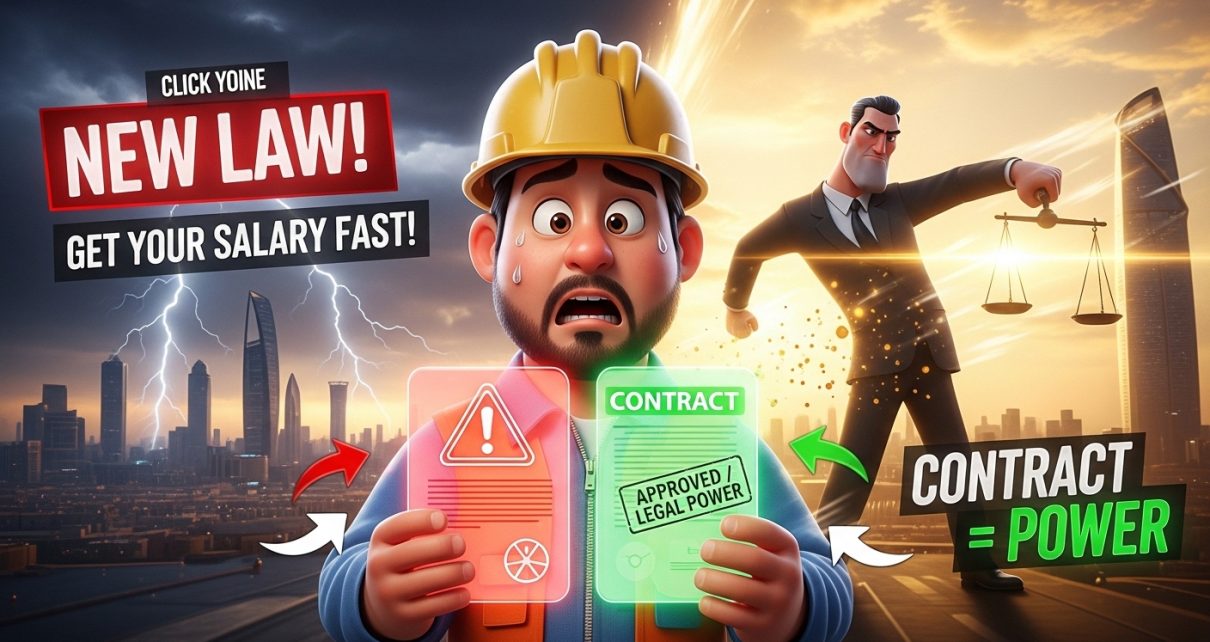
Saudi Arab New Salary Law 2026
A significant change is transforming the future of jobs in Saudi Arabia. Saudi Arabia has put in place a powerful New Salary Law 2026 that is changing the way employment contracts are made, checked, and enforced all over the country.
The new method connects two crucial government platforms, Qiwa and Najiz, ensuring immediate enforcement of legally binding employment contracts. The goal is simple but important: protect workers’ rights, make sure they get paid on time, and get rid of long legal delays in settling disputes.
The days of long and arduous legal battles are coming to an end. In the past, it could take a long time and be difficult to file a complaint if a worker had problems like not getting paid or breaking a contract. Employees had to go through many steps, starting with labor offices and then going to court.
The process could take months or even years. Things have changed a lot since then. When Qiwa and Najiz came together, employment contracts became legally binding. This means that workers can take action right away if their rights are violated.
This change isn’t just an upgrade; it’s a whole new system. The Saudi Ministry of Human Resources and Social Development, working with the Ministry of Justice, is making a bigger change that includes this new system. The change makes sure that every verified employment contract is more than just a piece of paper; it is also a legally binding document. Once you register and verify a contract online, you can immediately use it to enforce the law without undergoing a lengthy court process.
Two strong digital platforms are driving this revolution. Two digital platforms are at the heart of this change. Qiwa serves as the primary platform for managing employment contracts, while Najiz ensures their compliance through legal means. Employers must make contracts and upload them to Qiwa, where employees can read and approve them online. Once the contract is approved, it is automatically linked to Najiz, where it becomes legally binding.
Every contract now has built-in trust and openness. This integration makes sure that every contract is checked from both a legal and an administrative perspective. It makes things clear and makes sure that all the terms of employment, like salary, length of time, and duties, are clearly spelled out and protected by law. This two-step verification system is a big step toward building trust between workers and their bosses.
Now, salary protection is stronger than ever. The ability to enforce wage clauses is one of the most important things about this new system. This means that the terms of the contract that have to do with pay are now legally binding. If an employer doesn’t pay their workers on time, the workers can go directly to the Najiz platform to file an enforcement request. You can bypass the traditional legal procedures.
Workers can now quickly claim their rights. The rules are clear and meant to keep workers safe. A worker can sue if they don’t get paid in 30 days or if they only get partial payments for 90 days. Once the complaint is filed, the employer has a short time—usually five days—to respond or fix the problem. If the employer doesn’t follow the rules, they could face harsh legal consequences, such as fines and enforcement actions.
A step-by-step rollout makes sure that everyone can adapt easily. The rollout of this system is happening in stages to make sure the change goes smoothly. In October 2025, we initiated the first phase, which solely impacted new or modified contracts. The second phase, which started in March 2026, is all about renewing or extending fixed-term contracts. The last phase, which is expected to happen later in 2026, will include all kinds of contracts, even those that don’t have an end date.
Businesses no longer have a choice about compliance. Employers must now follow this system. Companies must make sure that all of their employment contracts are properly recorded on Qiwa and checked through Najiz. They also need to include correct information like the employee’s name, salary, payment dates, contract type, and other important details. If you don’t follow the rules, you could face fines, restrictions, or even a halt to business operations.
Workers are finally getting the protection they need. This change is very good for employees, on the other hand. They can now see a clear and open contract at any time on digital platforms. This not only boosts trust, but it also lowers the chances of misunderstandings or arguments. Workers, especially those who live and work abroad, have better protection and a quicker way to get their rights if something goes wrong.
This new system is all about speed and efficiency. Another good thing about this system is how fast it is. In the past, it could take months to settle a wage dispute because of all the legal steps involved. The process is now easier and done online. Workers can file claims online, and enforcement courts can act quickly based on the verified contract. This saves time, lowers stress, and makes sure that justice is done faster.
The job market is becoming more open and honest. Combining Qiwa and Najiz also makes the labor market more open and honest. Every contract is saved digitally, which makes it easier for the authorities to keep an eye on compliance and stop fraud. This makes the system more reliable and organized so that both workers and employers are responsible.
This change is an important part of a much bigger plan. This project fits well with Saudi Arabia’s Vision 2030, which aims to modernize the economy and make government services available online. The country is moving toward a smarter and more efficient system that helps everyone involved by making employment contracts enforceable and connecting them to advanced platforms.
The job market in Saudi Arabia looks better than ever for the future. This system is likely to change even more in the future. The last step will make all employment contracts in Saudi Arabia legally binding through this digital framework. This will make the labor system work better as a whole, with fewer problems and faster, fairer solutions when they do happen.
Every worker now needs to know how this system works. People who work in Saudi Arabia need to know how to use this system well. They should make sure that their contracts are properly registered on Qiwa and checked through official channels. It’s also important to keep track of salary payments and contract details. If there is a problem, they can quickly file a complaint through Najiz and start the process of making things right right away.
To stay compliant and competitive, businesses need to be smart. Employers must take steps to make sure they follow the new rules. This includes updating contracts that are already in place, making sure that salaries are paid on time, and responding quickly to any legal claims. Companies that follow these rules will have a more stable workforce and fewer legal problems.
Saudi Arabia is setting a new global standard for changing the way workers work. In conclusion, combining Qiwa and Najiz is a big change in Saudi Arabia’s labor laws. It makes employment contracts strong legal tools that protect workers and make it easier to enforce the law. The country is making the labor market modern, open, and efficient by combining technology with changes to the law.